
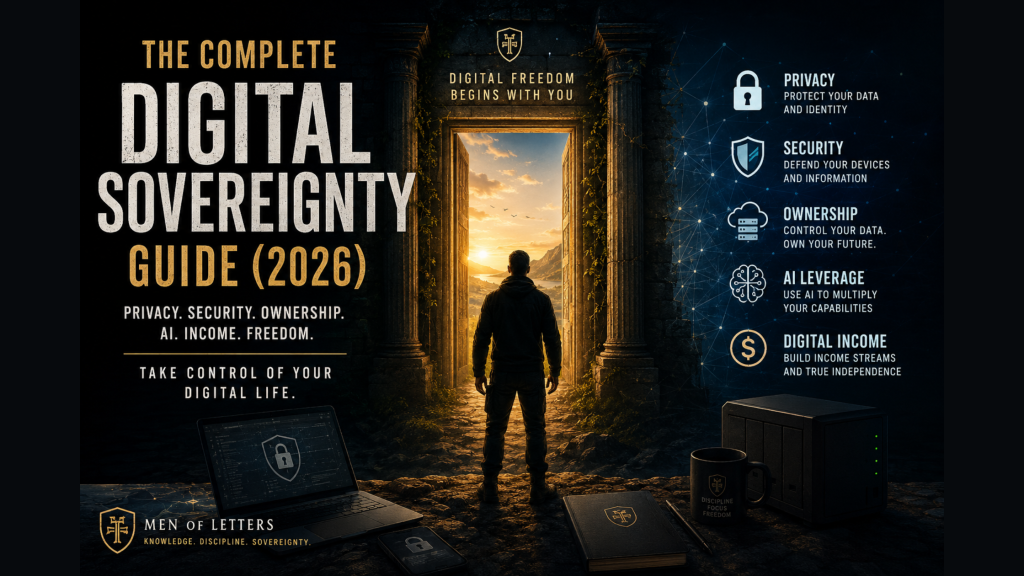
Introduction
We live in an age of unprecedented convenience.
Within seconds, we can communicate across continents, access vast libraries of knowledge, manage finances, store memories, run businesses, and increasingly delegate tasks to artificial intelligence. The modern digital world has created opportunities that previous generations could scarcely imagine.
Yet this convenience comes with a hidden cost.
Every day, billions of people unknowingly surrender pieces of their autonomy. Personal data is collected and analyzed. Online identities become dependent on platforms they do not control. Important files are entrusted to services that can change policies, raise prices, suspend accounts, or disappear entirely. News feeds shape perceptions. Algorithms influence decisions. Digital tools become necessities rather than optional aids.
Most people assume this is simply the price of participating in modern society.
It isn’t.
There is another path.
A path that does not require abandoning technology, rejecting innovation, or retreating from the digital world. Instead, it involves using technology intentionally rather than passively. It means understanding the systems that influence your life and taking practical steps to regain control over them.
This path is called Digital Sovereignty.
At Men Of Letters, sovereignty is the central principle that connects every aspect of life.
A sovereign individual is not controlled by impulses, institutions, trends, or systems they do not understand. They cultivate the capacity to govern themselves physically, mentally, financially, and digitally.
Digital Sovereignty is the technological expression of this philosophy.
It is the ability to control your data, protect your privacy, secure your digital environment, choose your tools consciously, and leverage technology in service of your goals rather than becoming dependent upon it.
In a world increasingly mediated by software, algorithms, and artificial intelligence, digital sovereignty is no longer a niche concern for cybersecurity professionals or technology enthusiasts.
It is becoming a foundational life skill.
This guide will provide a practical framework for developing digital sovereignty in 2026 and beyond. Whether you are a complete beginner or already familiar with concepts such as online privacy, cybersecurity, self-hosting, and AI productivity, you will discover actionable strategies that can help you build a more secure, independent, and resilient digital life.
The goal is not perfection.
The goal is control.
What Is Digital Sovereignty?
Defining Digital Sovereignty
Digital Sovereignty is the ability to intentionally control your digital life rather than allowing external systems to control it for you.
This includes control over:
- Your personal data
- Your online privacy
- Your digital identity
- Your devices
- Your information sources
- Your online income streams
- Your digital tools
- Your knowledge and skills
Digital sovereignty does not mean disconnecting from the internet.
It does not mean becoming paranoid.
It does not mean avoiding technology.
Instead, it means understanding where your dependencies exist and reducing unnecessary vulnerabilities.
Think of it this way:
A financially sovereign person is not someone who rejects money.
They understand money and use it wisely.
Likewise, a digitally sovereign person is not someone who rejects technology.
They understand technology and use it intentionally.
Why Digital Sovereignty Matters in 2026
Several trends make digital sovereignty more important than ever.
Artificial Intelligence Is Becoming Ubiquitous
AI assistants, recommendation systems, automated content generation, and intelligent search tools are rapidly becoming integrated into daily life.
These tools provide enormous value.
However, they also collect vast amounts of information and increasingly influence how people think, work, and make decisions.
Without awareness and intentionality, convenience can gradually become dependence.
Data Collection Continues to Expand
Every click, search, purchase, location check-in, and online interaction creates data.
Many services use this information to improve products.
Others use it to build detailed behavioral profiles.
Understanding what data you generate and where it goes has become an essential skill.
Cyber Threats Affect Everyone
Cybersecurity is no longer a concern only for corporations.
Individuals now face:
- Identity theft
- Account takeovers
- Data breaches
- Financial scams
- Phishing attacks
- Social engineering attempts
Basic personal cybersecurity has become as important as locking your front door.
Digital Income Opportunities Are Growing
The internet has made it possible for individuals to create businesses, audiences, products, and income streams independently.
Yet many creators become dependent on a single platform.
Digital sovereignty encourages diversification and ownership rather than reliance.
Benefits of Becoming Digitally Sovereign
The advantages extend far beyond privacy.
Greater Security
Strong cybersecurity practices dramatically reduce the likelihood of account compromise, fraud, and data loss.
More Privacy
You gain greater awareness and control over how your personal information is collected and used.
Increased Resilience
Your life becomes less vulnerable to platform changes, account suspensions, or service disruptions.
Better Productivity
Intentional technology use reduces distraction and improves focus.
Greater Independence
You rely less on centralized systems and develop skills that provide long-term flexibility.
Stronger Decision-Making
You become less susceptible to manipulation from algorithms, misinformation, and engineered attention systems.
Ultimately, digital sovereignty creates freedom through competence.
Pillar 1: Privacy
Privacy is often misunderstood.
Many people assume privacy means having something to hide.
In reality, privacy is about maintaining appropriate control over personal information.
You close the curtains in your home not because you’re hiding criminal activity, but because privacy is a normal human need.
The same principle applies online.
Understanding Online Privacy
Every digital interaction leaves traces.
Examples include:
- Search history
- Browsing habits
- Purchase records
- Location data
- Device information
- Social media activity
- Communication metadata
Over time, these data points create detailed profiles of individuals.
Privacy is about deciding which information should be shared, with whom, and under what circumstances.
Password Managers: The Foundation of Privacy
Most people still use weak passwords or reuse passwords across multiple accounts.
This is one of the largest personal cybersecurity risks.
Consider what happens when a website experiences a data breach.
If you reuse passwords, attackers may gain access to:
- Email accounts
- Banking services
- Social media accounts
- Cloud storage
- Work accounts
A password manager solves this problem.
What a Password Manager Does
A password manager:
- Generates strong passwords
- Stores them securely
- Automatically fills login credentials
- Reduces password reuse
Instead of remembering dozens of passwords, you remember one master password.
Recommended Features
Look for:
- End-to-end encryption
- Multi-device synchronization
- Secure password generation
- Passkey support
- Two-factor authentication integration
A password manager is arguably the highest-return privacy investment you can make.
Two-Factor Authentication (2FA)
Passwords alone are no longer sufficient.
Even strong passwords can be stolen through:
- Data breaches
- Phishing attacks
- Malware
- Credential stuffing
Two-factor authentication adds another layer of protection.
How It Works
You provide:
- Something you know (password)
- Something you have (authentication app or security key)
Even if a password is compromised, attackers typically cannot access the account without the second factor.
Best Practices
Use:
- Authentication apps
- Hardware security keys
Avoid:
- SMS-based authentication when alternatives exist
SMS remains better than no 2FA, but it is generally less secure than authenticator apps or security keys.
Privacy-Focused Browsers
Your browser serves as the gateway to the internet.
Many mainstream browsers collect varying levels of telemetry and usage data.
Privacy-focused alternatives often prioritize:
- Reduced tracking
- Enhanced security
- Better transparency
- Greater user control
Features to Look For
- Tracker blocking
- Fingerprinting protection
- Privacy-focused defaults
- Open-source development
- Strong security updates
The goal is not perfect anonymity.
The goal is reducing unnecessary data collection.
Privacy-Focused Search Engines
Search engines influence how people discover information.
Traditional search engines often personalize results based on user profiles.
Privacy-focused alternatives aim to:
- Reduce tracking
- Minimize profiling
- Separate searches from personal identity
Benefits include:
- Reduced data collection
- Fewer personalized profiles
- Improved information independence
Understanding VPNs
A Virtual Private Network (VPN) encrypts internet traffic between your device and a VPN provider.
What VPNs Can Do
VPNs can:
- Protect traffic on public Wi-Fi
- Reduce ISP visibility
- Improve privacy
- Enhance security while traveling
What VPNs Cannot Do
VPNs do not:
- Make you anonymous
- Eliminate tracking entirely
- Protect against poor security practices
A VPN is one tool within a larger privacy strategy—not a magical solution.
Email Privacy
Email remains one of the most important components of digital identity.
Many online accounts are linked directly to email addresses.
If your email account is compromised, attackers may gain access to numerous connected services.
Email Security Practices
Use:
- Strong passwords
- Two-factor authentication
- Separate recovery methods
Consider maintaining:
- Primary email
- Financial email
- Public-facing email
This separation reduces risk and improves organization.
Understanding Data Collection
Most modern platforms operate using data-driven business models.
Data may be used for:
- Advertising
- Analytics
- Product improvement
- Personalization
- Recommendation systems
The issue is not necessarily that data is collected.
The issue is whether users understand:
- What is collected
- Why it is collected
- Who can access it
- How long it is stored
Digitally sovereign individuals make informed decisions rather than blindly accepting defaults.
Practical Privacy Habits
You do not need advanced technical skills to improve privacy.
Start with these actions:
- Use a password manager
- Enable 2FA everywhere possible
- Review privacy settings
- Limit unnecessary app permissions
- Remove unused accounts
- Separate important email addresses
- Be mindful of what you share publicly
Small changes produce significant long-term benefits.
Pillar 2: Security
Privacy and security are related but distinct.
Privacy concerns who can access information.
Security concerns protecting information and systems from unauthorized access.
You can think of privacy as the goal and security as the mechanism that helps achieve it.
Without security, privacy cannot exist.
Why Personal Cybersecurity Matters
Many people assume cybercriminals only target wealthy individuals or large organizations.
In reality, attackers frequently target ordinary people because:
- Security practices are often weak
- Automated attacks scale easily
- Personal data has value
- Financial fraud remains profitable
Cybersecurity for beginners is not about becoming a hacker.
It is about reducing avoidable risk.
The Core Principles of Cybersecurity
Nearly all security practices stem from several fundamental concepts.
Least Privilege
Only grant access when necessary.
Examples:
- Limit app permissions
- Avoid administrator access when unnecessary
- Remove unused integrations
Defense in Depth
Never rely on a single protective measure.
Combine:
- Strong passwords
- 2FA
- Security updates
- Backups
- Safe browsing habits
Assume Breach
Operate under the assumption that some systems may eventually be compromised.
This mindset encourages preparation and resilience.
Safe Browsing Practices
The internet contains valuable information and countless threats.
Safe browsing habits dramatically reduce risk.
Before Clicking
Ask:
- Does the link look legitimate?
- Was it expected?
- Does the source seem trustworthy?
Many attacks rely on urgency and emotion.
Pause before acting.
Keep Software Updated
Updates often include:
- Security patches
- Vulnerability fixes
- Stability improvements
Outdated software remains one of the most common attack vectors.
Avoid Unnecessary Downloads
Download software only from trusted sources.
Treat unknown files with caution.
A useful rule:
If you did not expect it, verify it.
Understanding Phishing
Phishing remains one of the most successful cyberattack methods because it targets human psychology rather than technical weaknesses.
Attackers often impersonate:
- Banks
- Government agencies
- Employers
- Friends
- Technology companies
The goal is typically to steal:
- Passwords
- Financial information
- Personal data
- Authentication codes
Common Phishing Red Flags
Watch for:
- Urgent language
- Threats
- Unexpected attachments
- Requests for credentials
- Suspicious links
- Poor grammar or formatting
When uncertain:
Do not click.
Verify independently.
Device Security Essentials
Your devices are the gateways to your digital life.
Protecting them is non-negotiable.
Secure Your Devices
Enable:
- Device encryption
- Screen locks
- Biometric authentication
- Automatic updates
Remove Unused Software
Every installed application increases your attack surface.
Regularly audit and remove unnecessary software.
Maintain Physical Security
Even strong cybersecurity practices fail if a device is stolen and left unprotected.
Physical security remains part of digital security.
Backups: Your Ultimate Safety Net
Many people only appreciate backups after losing important data.
Backups protect against:
- Hardware failure
- Accidental deletion
- Malware
- Ransomware
- Service outages
A backup strategy is one of the most important elements of personal cybersecurity.
In Part 2, we will explore advanced backup systems, self-hosting solutions, data ownership, AI leverage, and the practical path toward complete digital independence.
Pillar 3: Ownership of Data
Most people spend years creating digital assets without realizing they do not truly control them.
Family photos.
Important documents.
Personal journals.
Business files.
Creative projects.
Professional knowledge.
Entire livelihoods.
They are often scattered across dozens of cloud services, social platforms, and online accounts controlled by other companies.
The convenience is undeniable.
The vulnerability is often invisible.
Digital sovereignty begins with understanding a simple principle:
If you do not control your data, you do not fully control your digital life.
Why Data Ownership Matters
Imagine storing every important possession you own inside a rented warehouse.
The warehouse is secure.
The rent is affordable.
The staff are helpful.
Everything works perfectly.
Until one day:
- Prices increase dramatically.
- Terms of service change.
- Your account is suspended.
- The company shuts down.
- Access is temporarily unavailable.
You may still technically own your possessions, but practical control has been reduced.
This is the position many people unknowingly occupy online.
The modern internet encourages convenience over ownership.
Digital sovereignty encourages convenience without surrendering control.
The Rise of Cloud Dependence
Cloud services have transformed modern computing.
Today we rely on cloud platforms for:
- File storage
- Notes
- Calendars
- Communication
- Photos
- Business operations
- Entertainment
- Financial records
Cloud services offer tremendous advantages:
Benefits of the Cloud
- Accessibility from anywhere
- Automatic synchronization
- Reduced hardware requirements
- Collaboration features
- Convenience
For many people, cloud services are entirely appropriate.
The problem is not cloud computing itself.
The problem arises when cloud convenience creates total dependency.
Understanding Centralization Risk
Centralization occurs when critical parts of your digital life depend on a small number of providers.
For example:
Imagine one company controls:
- Your email
- Your cloud storage
- Your documents
- Your photos
- Your passwords
- Your calendar
A single account problem could potentially affect every area of your digital life.
This is known as concentration risk.
Digitally sovereign individuals seek resilience rather than dependence.
The goal is not abandoning major platforms.
The goal is ensuring that important aspects of your life are not entirely controlled by them.
What Is Data Portability?
Data portability is the ability to move your information between platforms.
In simple terms:
Can you leave a service without losing everything?
Questions worth asking:
- Can you export your files?
- Can you download your contacts?
- Can you transfer your notes?
- Can you migrate your photos?
- Can you back up your data?
If the answer is no, you’re becoming locked into an ecosystem.
Digital sovereignty favors tools that respect user ownership and portability.
The Sovereign Data Principle
A useful mindset is:
Every important file should exist in more than one location.
This principle protects against:
- Hardware failure
- Account lockouts
- Service outages
- Accidental deletion
- Ransomware attacks
Ownership becomes meaningful only when recovery is possible.
Building a Personal Backup System
Most people believe backups are important.
Few actually create them.
This is understandable.
Backups feel unnecessary until disaster strikes.
Then they become priceless.
The 3-2-1 Backup Rule
One of the most respected backup strategies is the 3-2-1 method.
Maintain:
- 3 copies of important data
- 2 different storage mediums
- 1 copy stored off-site
For example:
Original Files:
- Laptop
Backup #1:
- External hard drive
Backup #2:
- Cloud backup service
This simple approach dramatically improves resilience.
What Should You Back Up?
Prioritize:
Personal Records
- Identification documents
- Tax records
- Financial records
- Insurance documents
Family Assets
- Photos
- Videos
- Scanned memorabilia
Creative Work
- Writing
- Artwork
- Music
- Research
Business Assets
- Client data
- Contracts
- Content libraries
- Marketing assets
Knowledge Assets
- Notes
- Journals
- Learning resources
- Personal databases
Many people underestimate the value of accumulated knowledge.
Years of experience often exist in digital form.
Protect it accordingly.
Self-Hosting: The Next Step Toward Digital Independence
As your technical skills grow, you may begin exploring self-hosting.
Self-hosting means running services yourself rather than relying entirely on third-party providers.
Instead of renting every digital tool from someone else, you operate some of them directly.
Examples include:
- File storage
- Notes
- Password managers
- Media libraries
- Personal websites
- Knowledge management systems
Self-hosting is one of the most powerful expressions of digital self-reliance.
However, it is not required for everyone.
What Self-Hosting Is Not
Many beginners imagine self-hosting as something only engineers can do.
This is increasingly untrue.
Modern tools have made self-hosting significantly more accessible.
At the same time, self-hosting should not be romanticized.
It introduces responsibilities:
- Maintenance
- Updates
- Backups
- Security management
Digital sovereignty means accepting responsibility where it creates meaningful value.
Not every service needs to be self-hosted.
Understanding Nextcloud
One of the most popular introductions to self-hosting is Nextcloud.
Nextcloud can function as a private alternative to many cloud storage platforms.
Capabilities include:
- File synchronization
- Document storage
- Calendar management
- Contacts
- Photo storage
- Collaboration tools
For many users, Nextcloud represents an ideal balance between convenience and ownership.
It provides practical experience managing personal infrastructure while remaining beginner-friendly.
NAS Systems and Personal Storage
Another common step toward data ownership is a NAS.
NAS stands for Network Attached Storage.
Think of it as a personal cloud server inside your home.
A NAS can provide:
- Centralized file storage
- Media management
- Backup destinations
- Family file sharing
- Self-hosted applications
Benefits include:
- Greater control
- Reduced dependence on subscriptions
- Long-term storage flexibility
A NAS is not mandatory.
But for families, creators, and business owners, it can become a valuable component of a sovereign digital ecosystem.
What Should You Self-Host?
A common beginner mistake is trying to self-host everything.
This usually ends badly.
Instead, prioritize services where ownership creates meaningful benefits.
Good candidates include:
Personal File Storage
Important documents and media often justify greater control.
Personal Knowledge Systems
Notes, research, and learning resources become increasingly valuable over time.
Password Management
Some users prefer greater control over credential storage.
Personal Websites
Owning your platform reduces dependency on social networks.
What You Probably Should Not Self-Host
Not every service benefits from self-hosting.
Examples may include:
Mission-Critical Email
Email infrastructure can be complex and demanding.
Banking Services
Use professional institutions.
Highly Specialized Enterprise Services
Professional providers often offer advantages difficult to replicate personally.
Digital sovereignty is not about rejecting expertise.
It is about understanding dependencies and making conscious choices.
Building Ownership Before Complexity
Many people become fascinated by advanced self-hosting setups before mastering the fundamentals.
This is backwards.
The proper progression is:
- Organize your files.
- Create reliable backups.
- Learn data portability.
- Improve cybersecurity.
- Explore self-hosting gradually.
Ownership without organization creates chaos.
Ownership with discipline creates freedom.
Pillar 4: AI and Digital Leverage
Artificial Intelligence is rapidly becoming one of the most powerful technologies available to individuals.
The internet democratized information.
AI is democratizing capability.
Tasks that once required teams of specialists can increasingly be performed by individuals equipped with the right tools and knowledge.
For the sovereign individual, AI is not a replacement for thinking.
It is a force multiplier.
Why AI Matters for Digital Sovereignty
Many discussions about AI focus on extremes.
Some predict utopia.
Others predict catastrophe.
The reality is more practical.
AI is becoming a tool.
Those who learn to use it effectively will gain substantial advantages.
Those who ignore it entirely may find themselves increasingly disadvantaged.
Digital sovereignty requires understanding AI rather than fearing it.
AI as a Force Multiplier
AI can accelerate:
- Research
- Writing
- Learning
- Planning
- Analysis
- Coding
- Content creation
- Business operations
This allows individuals to accomplish more with fewer resources.
A sovereign mindset views AI as leverage.
Not dependency.
AI Productivity for Everyday Life
Many people think AI is only useful for technology professionals.
In reality, AI productivity extends across nearly every field.
Examples include:
Learning Faster
AI can:
- Explain difficult concepts
- Generate study plans
- Summarize information
- Create practice questions
Writing Better
AI can assist with:
- Drafting ideas
- Outlining articles
- Refining communication
- Research organization
Problem Solving
AI can help break down:
- Business challenges
- Technical issues
- Decision-making frameworks
- Project planning
The key is maintaining ownership of the final judgment.
The Difference Between Assistance and Dependence
This distinction is crucial.
A sovereign individual uses AI to improve thinking.
A dependent individual uses AI to replace thinking.
These are not the same.
For example:
Healthy use:
- Verify information
- Challenge assumptions
- Compare perspectives
- Improve workflows
Unhealthy use:
- Blindly trust outputs
- Outsource judgment
- Avoid learning fundamentals
Technology should enhance competence.
Not erode it.
Building a Personal Knowledge System
Knowledge compounds.
Unfortunately, most people consume information without retaining it.
A personal knowledge system helps solve this problem.
Think of it as a second brain for:
- Notes
- Insights
- Research
- Lessons learned
- Ideas
- Projects
Over time this becomes one of your most valuable digital assets.
Components of a Personal Knowledge System
A useful system often includes:
Capture
Collect valuable information.
Examples:
- Notes
- Articles
- Quotes
- Observations
Organization
Create structures that make information retrievable.
Reflection
Review and connect ideas.
Creation
Turn knowledge into output:
- Writing
- Businesses
- Products
- Content
- Decisions
Knowledge that remains unused creates little value.
Knowledge applied repeatedly creates leverage.
AI-Assisted Learning
One of the most powerful applications of AI is personalized education.
Instead of passively consuming information, you can:
- Ask questions
- Request explanations
- Simulate conversations
- Generate examples
- Test understanding
This creates a highly adaptive learning environment.
Used correctly, AI can dramatically accelerate skill acquisition.
Automation and Digital Leverage
Automation allows systems to perform repetitive tasks.
Examples include:
- Scheduling
- Data organization
- Content distribution
- Workflow management
- Customer communication
Automation creates leverage because it separates effort from output.
One action can produce repeated results.
The sovereign goal is not laziness.
It is strategic allocation of attention.
Your attention is one of your most valuable resources.
Protect it accordingly.
The Risks of AI Dependence
Every powerful tool introduces risks.
Potential dangers include:
Cognitive Atrophy
Over-reliance can weaken critical thinking.
Information Errors
AI systems sometimes produce inaccurate outputs.
Privacy Concerns
Sensitive information should be shared carefully.
Skill Erosion
Fundamental skills should remain intact.
Technology should support competence, not replace it.
Human Judgment Remains Irreplaceable
AI can generate possibilities.
Humans determine priorities.
AI can summarize information.
Humans assign meaning.
AI can identify patterns.
Humans establish values.
This distinction is central to the Men Of Letters philosophy.
Technology is a servant.
Never a master.
Digital sovereignty requires maintaining that relationship.
The Sovereign Approach to AI
The most effective approach combines:
- Human judgment
- Personal responsibility
- Critical thinking
- Technological leverage
Ask yourself:
Does this tool increase my capabilities?
Or does it increase my dependence?
The answer determines whether technology is serving your sovereignty or undermining it.
The sovereign individual embraces useful tools while retaining ownership of decisions, values, and direction.
This is the essence of digital leverage.
And in the age of artificial intelligence, it may become one of the most important skills a person can develop.
Pillar 5: Digital Income
Digital sovereignty is not only about protecting yourself.
It is also about creating opportunities.
Privacy protects freedom.
Security protects assets.
Ownership protects independence.
Income expands options.
A sovereign life requires resources. While money alone cannot create freedom, a lack of financial resources often limits it.
The internet has created unprecedented opportunities for individuals to build income streams without requiring permission from gatekeepers, large institutions, or traditional intermediaries.
Never before has a single individual been able to:
- Build an audience
- Publish ideas
- Sell products
- Teach skills
- Launch businesses
- Reach global markets
from a laptop and an internet connection.
The challenge is learning how to do so without becoming dependent on platforms you do not control.
Why Digital Income Matters
For most of human history, earning income required physical presence.
You had to be somewhere.
Today, many forms of value creation can be detached from location.
This creates opportunities for:
- Geographic flexibility
- Career independence
- Multiple income streams
- Greater resilience
Digital income supports digital sovereignty because it reduces dependence on a single employer, platform, or economic system.
The goal is not becoming rich overnight.
The goal is increasing optionality.
Optionality creates freedom.
Creating Digital Assets
A digital asset is something that can continue generating value after it has been created.
Examples include:
- Articles
- Videos
- Online courses
- Software
- E-books
- Newsletters
- Templates
- Digital communities
- Educational resources
Unlike traditional labor, digital assets can often be reused, distributed, and monetized repeatedly.
This creates leverage.
A single article can attract readers for years.
A single video can generate thousands of views long after publication.
A digital product can continue selling while you sleep.
Digital sovereignty favors asset creation over pure time-for-money exchanges.
Content Creation as a Sovereign Skill
Content creation has become one of the most powerful ways to build influence and opportunity.
Creating content allows you to:
- Share knowledge
- Build trust
- Develop expertise
- Attract opportunities
- Grow an audience
You do not need millions of followers.
A small audience that trusts you is often more valuable than a large audience that ignores you.
The sovereign approach focuses on consistency and usefulness rather than chasing virality.
Useful content compounds.
Viral content often disappears.
Building an Online Business
The internet allows individuals to create businesses around:
- Skills
- Knowledge
- Services
- Products
- Communities
Examples include:
Service Businesses
- Consulting
- Design
- Development
- Marketing
- Coaching
Product Businesses
- Software
- Templates
- Courses
- E-books
- Memberships
Media Businesses
- Blogs
- Newsletters
- Podcasts
- YouTube channels
The best digital businesses solve real problems.
Technology is simply the delivery mechanism.
Freelancing and Skill Monetization
For many people, freelancing provides the fastest path toward digital income.
Freelancing allows you to monetize existing skills such as:
- Writing
- Programming
- Graphic design
- Video editing
- Marketing
- Cybersecurity
- Research
- Project management
Unlike traditional employment, freelancing encourages direct ownership of client relationships and reputation.
It can also become a stepping stone toward larger business opportunities.
Digital Products
Digital products are particularly attractive because they can often be sold repeatedly without significant additional production costs.
Examples include:
- Templates
- Checklists
- Guides
- Courses
- Software tools
- Design resources
A well-designed digital product transforms expertise into a scalable asset.
The key is solving a specific problem for a specific audience.
Complexity does not create value.
Solutions create value.
Avoiding Platform Dependency
One of the biggest mistakes creators make is building their entire business on a single platform.
Examples include:
- Depending solely on social media
- Relying on one marketplace
- Building exclusively on one advertising source
Platform dependency creates risk because:
- Algorithms change
- Policies change
- Monetization changes
- Accounts can be suspended
A digitally sovereign creator seeks ownership.
Own Your Platform
As early as possible, focus on assets you control.
Examples include:
- Your website
- Your newsletter
- Your customer list
- Your products
- Your brand
Platforms can help you grow.
They should not become your foundation.
Your foundation should belong to you.
The Digital Sovereignty Roadmap
Digital sovereignty is not achieved in a weekend.
It is built gradually through knowledge, habits, and systems.
The following roadmap provides a practical progression.
Beginner Level
The objective at this stage is awareness and foundational protection.
Action Steps
Privacy
- Install a password manager
- Replace weak passwords
- Enable 2FA on critical accounts
Security
- Update all devices
- Remove unused software
- Learn phishing awareness
Data Ownership
- Organize important files
- Create basic backups
- Export important account data
AI
- Learn prompt fundamentals
- Use AI for learning and productivity
Income
- Identify one monetizable skill
- Create a professional online presence
Goal
Establish basic control over your digital life.
Intermediate Level
The objective is reducing dependence and increasing capability.
Action Steps
Privacy
- Audit privacy settings
- Reduce unnecessary data sharing
- Explore privacy-focused tools
Security
- Implement a backup strategy
- Learn basic networking concepts
- Create incident recovery plans
Data Ownership
- Learn data portability
- Experiment with self-hosted tools
- Evaluate personal cloud solutions
AI
- Build AI-assisted workflows
- Create a personal knowledge system
- Automate repetitive tasks
Income
- Launch a digital asset
- Build an email list
- Develop multiple revenue channels
Goal
Create resilience and self-reliance.
Advanced Level
The objective is full digital leverage and long-term sovereignty.
Action Steps
Privacy
- Develop advanced threat awareness
- Implement compartmentalization strategies
Security
- Operate a home lab
- Study cybersecurity fundamentals deeply
- Learn OSINT and defensive techniques
Data Ownership
- Operate self-hosted services
- Maintain advanced backup systems
- Control critical digital infrastructure
AI
- Integrate AI into workflows
- Develop custom automations
- Build AI-enhanced systems
Income
- Operate multiple digital assets
- Diversify revenue streams
- Build platform-independent businesses
Goal
Achieve sustainable digital independence.
Common Mistakes on the Path to Digital Sovereignty
Many people encounter the same obstacles.
Understanding them early can save years of frustration.
Privacy Paranoia
Some individuals become so focused on privacy that they make technology difficult to use.
Digital sovereignty is not about disappearing.
It is about intentionality.
Perfect privacy is often impractical.
Practical privacy is achievable.
Tool Obsession
Beginners often spend excessive time comparing tools.
The reality is simple:
A good system used consistently is better than a perfect system never implemented.
Focus on habits first.
Tools second.
Chasing Every Trend
Technology changes rapidly.
New apps, platforms, and AI tools appear constantly.
The sovereign individual focuses on principles rather than trends.
Principles endure.
Trends come and go.
Overcomplication
Many people attempt advanced setups before mastering fundamentals.
They build elaborate systems without developing the habits necessary to maintain them.
Complexity often creates fragility.
Simplicity creates resilience.
Ignoring Fundamentals
No VPN can compensate for weak passwords.
No AI tool can replace critical thinking.
No self-hosted server can compensate for poor backups.
Master the basics first.
Always.
The Men Of Letters Perspective
At Men Of Letters, sovereignty extends beyond technology.
Digital sovereignty is only one pillar.
A truly sovereign life requires balance across four domains.
Digital Sovereignty and Biological Performance
Technology should support health rather than undermine it.
Without energy:
- Knowledge becomes useless.
- Opportunities go unrealized.
- Productivity declines.
Digital tools should help you:
- Improve health
- Track progress
- Reduce friction
- Increase capability
Not consume your attention endlessly.
The sovereign individual controls technology.
Technology does not control the individual.
Digital Sovereignty and Financial Independence
Financial freedom increasingly depends on digital capability.
Modern opportunities often require:
- Technical literacy
- Digital communication
- Online distribution
- Digital leverage
The ability to create, distribute, and monetize value online has become a critical component of financial independence.
Digital Sovereignty and Inner Architecture
The greatest threats are not always technical.
Many are psychological.
Algorithms compete for attention.
Social platforms influence emotions.
News feeds shape perceptions.
Notifications fragment focus.
Without discipline, technology becomes an external operating system for the mind.
Inner Architecture provides the foundation that makes digital sovereignty possible.
Self-control remains the ultimate security system.
The Four Pillars Working Together
The Men Of Letters framework consists of:
Biological Performance
Build energy.
Financial Independence
Build resources.
Inner Architecture
Build discipline.
Digital Sovereignty
Build control.
Each reinforces the others.
Weakness in one area eventually affects the rest.
Strength across all four creates resilience.
The objective is not perfection.
The objective is sovereignty.
Key Takeaways
- Digital sovereignty is about control, not isolation.
- Privacy begins with awareness and intentional choices.
- Personal cybersecurity is a foundational life skill.
- Ownership matters more than convenience in the long run.
- Self-hosting can increase independence when implemented thoughtfully.
- AI should be used as leverage rather than a substitute for thinking.
- Digital income creates flexibility and resilience.
- Building assets is more powerful than relying solely on labor.
- Principles matter more than tools.
Sovereignty is built gradually through consistent action.
Digital Sovereignty Action Checklist
Week 1
- Install a password manager
- Enable 2FA
- Update all devices
Week 2
- Audit privacy settings
- Remove unused accounts
- Organize important files
Week 3
- Create a backup system
- Learn phishing detection
- Export critical data
Week 4
- Build an AI productivity workflow
- Start a personal knowledge system
- Identify a digital income opportunity
Next 90 Days
- Create a website
- Build an email list
- Launch a digital asset
- Explore self-hosting
- Develop long-term digital independence goals
Frequently Asked Questions
1. What is digital sovereignty?
Digital sovereignty is the ability to control your data, privacy, digital identity, tools, and online opportunities rather than becoming dependent on external systems.
2. Is digital sovereignty only for technical people?
No. Most foundational practices require little technical knowledge and can be implemented by anyone.
3. Do I need to self-host everything?
No. Self-hosting is a tool, not a requirement. Focus on ownership where it provides meaningful value.
4. Is online privacy still possible in 2026?
Perfect privacy is unrealistic, but significantly improving privacy is both practical and achievable.
5. What is the first step toward digital sovereignty?
Use a password manager and enable two-factor authentication.
6. Are VPNs necessary?
Not always, but they can be useful components of a broader privacy strategy.
7. How important is cybersecurity for beginners?
Extremely important. Most successful attacks exploit basic security weaknesses.
8. Can AI help improve productivity?
Yes. AI can accelerate learning, research, planning, and content creation when used responsibly.
9. What is the biggest mistake people make?
Ignoring fundamentals while chasing advanced tools and trends.
10. How long does it take to become digitally sovereign?
Digital sovereignty is an ongoing process rather than a destination. Meaningful progress can begin in a single day.
Conclusion
The future will belong to individuals who understand how to navigate increasingly complex systems without becoming controlled by them.
Digital sovereignty is not about rejecting technology.
It is about mastering your relationship with it.
The sovereign individual does not fear technology.
Nor do they worship it.
They understand it.
They use it intentionally.
They maintain ownership where it matters.
They protect what they build.
They cultivate skills that create independence rather than dependence.
In a world increasingly shaped by algorithms, artificial intelligence, platforms, and digital infrastructure, sovereignty is no longer merely a philosophical ideal.
It is becoming a practical necessity.
Start small.
Secure your accounts.
Protect your data.
Develop your skills.
Build assets.
Create systems.
Take ownership of your digital life one step at a time.
Because every step toward digital sovereignty is ultimately a step toward personal sovereignty.
And sovereignty, in every domain of life, remains worth pursuing.
LATEST PROTOCOL GUIDES
Practical Guides. Real Results
DIGITAL



Start Your Protocol
Small, deliberate steps create massive transformation over time.